STATUS · ALL SYSTEMS NOMINAL ·
CEWIT · STONY BROOK · 40.92°N 73.12°W ● LIVE
Field StationCEWIT · Stony Brook, NY
Established2007
Active Instruments14 / 14
ModeAdaptive scan

Sensing the atmosphere with precision.

We are an academic research initiative focused on integrating advanced weather sensing, machine learning, and resilient communications to enable real-time environmental intelligence. We integrate and connect advanced microwave, visible, and infrared sensing platforms and develop AI-driven analysis frameworks to improve observational capabilities and operational decision support across research and applied settings.

KASPR · Reflectivity +18.4 dBZ
SKYLER-II · Range 10.0 km
ROARS · Bands X / Ku
Storage Online 350 TB

What we work on.

Six core areas spanning ground-based and spaceborne sensing, cloud microphysics, and adaptive cyberinfrastructure for atmospheric science.

01 / Radar remote sensing
Millimeter-wavelength & phased-array radars for the atmosphere.
Multi-frequency, polarimetric and Doppler-spectra observation of clouds and precipitation. Includes KASPR (Ka-band), SKYLER (X-band phased array) and ROARS (X/Ku dual-band) systems built and operated by the group.
Ka · X · Ku bandPolarimetryDoppler
02 / Cloud microphysics
Ice nucleation & precipitation processes.
Aerosol-cloud interactions, droplet activation, and entrainment, studied through coordinated multi-sensor observation.
03 / AI & adaptive sensing
Machine learning for the atmosphere.
The MAAS cyberinfrastructure delivers real-time, fine-grained, coordinated control of multiple radars for agile sampling.
04 / Spaceborne missions
EarthCARE · WIVERN · INCUS.
Forward-modeling tools and retrieval algorithms supporting active spaceborne radar science.
05 / Urban & boundary layer
Mobile observatories in cities.
Boundary-layer processes, climate resilience, environmental justice, and security applications in metropolitan areas.
230+
Peer-reviewed publications
25yrs
At the cutting edge of radar
14
Scientists · postdocs · students
350TB
Online observation archive
"If you can't measure it, you can't improve it."
— Lord Kelvin

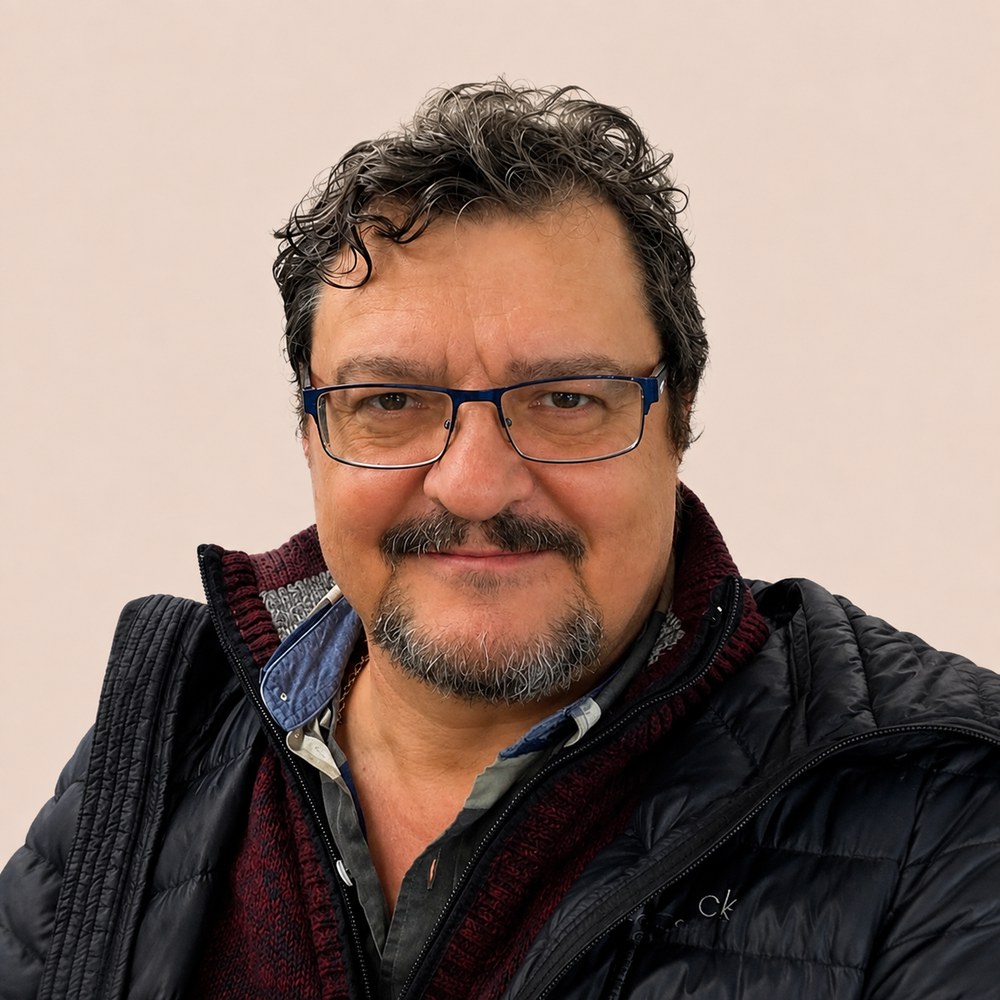
Led by Pavlos Kollias.

SUNY Empire Innovation Professor at SoMAS, Stony Brook University. Joint appointment at Brookhaven National Laboratory. Author of more than 230 peer-reviewed publications.

MO
Mariko Oue
Research Professor
AB
Alessandro Battaglia
Associate Professor
KL
Katia Lamer
Director, CMAS
FY
Fan Yang
Scientist
EL
Edward Luke
Applications Engineer
ZX
Zhuocan Xu
Scientist
NA
Nithin Allwayin
Postdoc
KM
Katherine McKeown
Postdoc

Radar facilities.

State-of-the-art radar systems across multiple bands and scanning architectures.

RAD-01KASPR
Scanning polarimetric Ka-band radar. Doppler spectra and full polarimetric observables — H/V transmit, simultaneous co-/cross-polar reception. The flagship of the observatory.
BandKa · 35 GHz
Wavelength8 mm
Beamwidth0.32°
RAD-02SKYLER-I & II
X-band phased array radars. SKYLER-II mounted on a mobile platform with 2,560 T/R channels for individual amplitude, phase, and polarization control during field campaigns.
BandX-band
T/R channels2,560
Sensitivity−5 dBZ @ 10 km
RAD-03ROARS
Rain, Ocean, Atmospheric Radar System — prototype dual-frequency radar with metamaterials antenna. Currently deployed at the DOE ARM Bankhead National Forest site.
BandsX / Ku dual
Aperture< 1 m
Beam scan±60°
SYS-04MAAS
Multisensor Agile Adaptive Sampling cyberinfrastructure. Real-time coordinated control of connected radar systems with feature detection and tracking. NSF CISE funded.
TypeCyberinfra
FundingNSF CISE
PIKollias et al.
In partnership with
Stony Brook University Brookhaven National Lab McGill University Politecnico di Torino University of Cologne